Household Small Reverb Sound Card Audio Mixer with USB Interface, D4M Standard, 26x22.5x8cm Plastic Compact Mixer for Home Recording, Podcasting and Live Streaming, Picture Colour


Household Small Reverb Sound Card Audio Mixer with USB Interface, D4M Standard, 26x22.5x8cm Plastic Compact Mixer for Home Recording, Podcasting and Live Streaming, Picture Colour
Compact Household Audio Mixer with Reverb and USB Interface
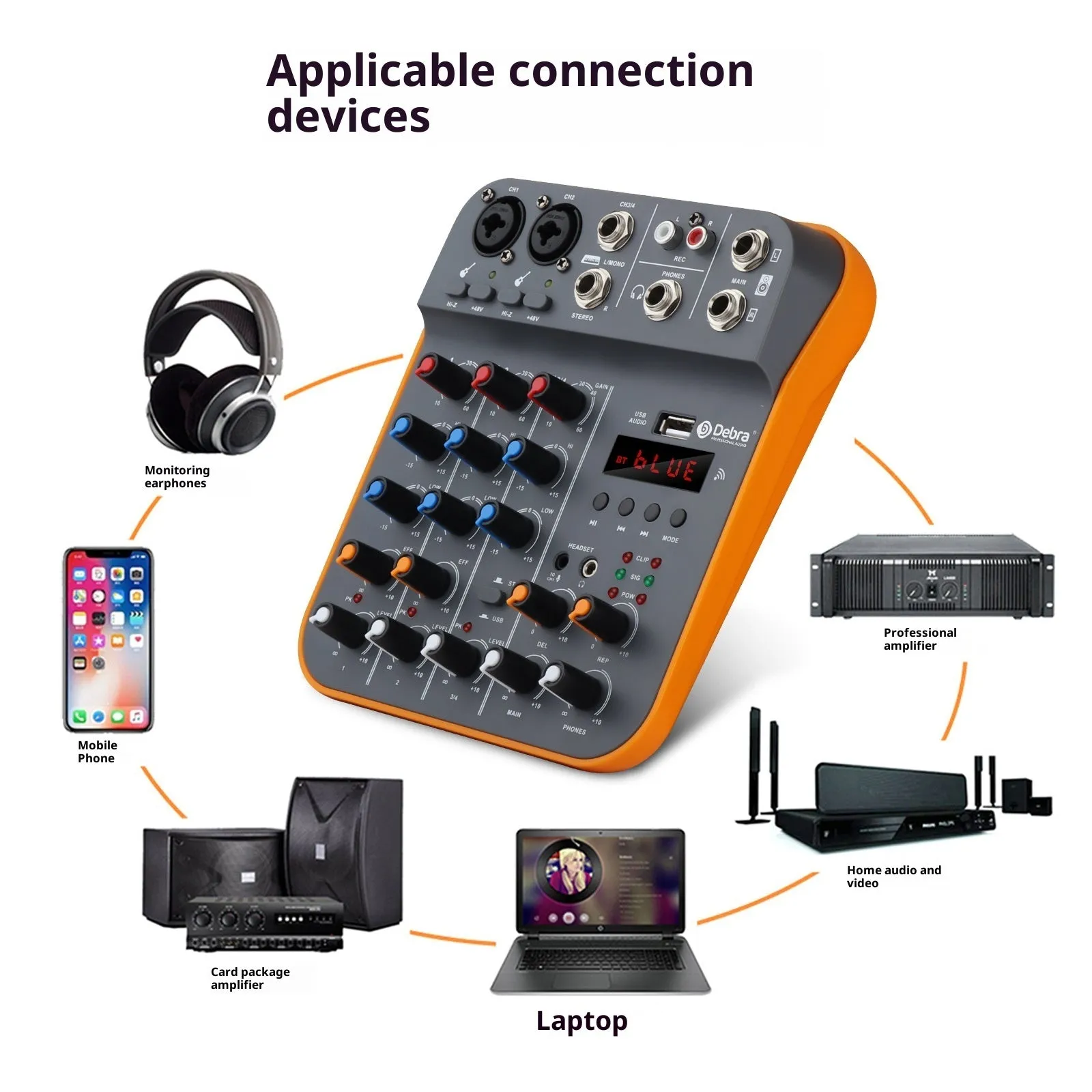
This household small reverb sound card audio mixer is a compact unit built around the D4M standard specification. It measures 26 x 22.5 x 8 cm and has a plastic body, with a USB interface listed as the connection type. For anyone putting together a simple home audio setup, the appeal is in the size and the combination of mixing and reverb in one small box. It does not need a large desk or a rack, and it can be moved or stored without much effort. The source information is limited to the specification, size, material, interface and packing list, so this description avoids claiming channel counts, sound quality ratings or effects parameters that are not stated. Instead, it explains what the product is, what comes in the box, and where it can realistically be used based on the facts available.
Features and Construction
The mixer is presented as a household audio mixer with a reverb function and a USB interface. Its construction is plastic, and the stated dimensions place it in the small-format category. These details matter because they define how the unit fits into a room and how it connects to other equipment. The source does not list channel numbers, EQ bands or output types beyond the USB interface, so the focus here stays on the confirmed basics.
Material and Build
The body is made of plastic, as stated in the product information. This is a practical material for a small household mixer because it keeps the unit light enough to lift and reposition without strain. It also means the mixer can be placed on a desk, shelf or table without needing a heavy-duty stand. No metal casing, mounting brackets or protective case are mentioned in the source, so those should not be assumed. The plastic construction is the only build detail provided, and it is described here without adding claims about impact resistance or longevity.
Size and Practical Fit
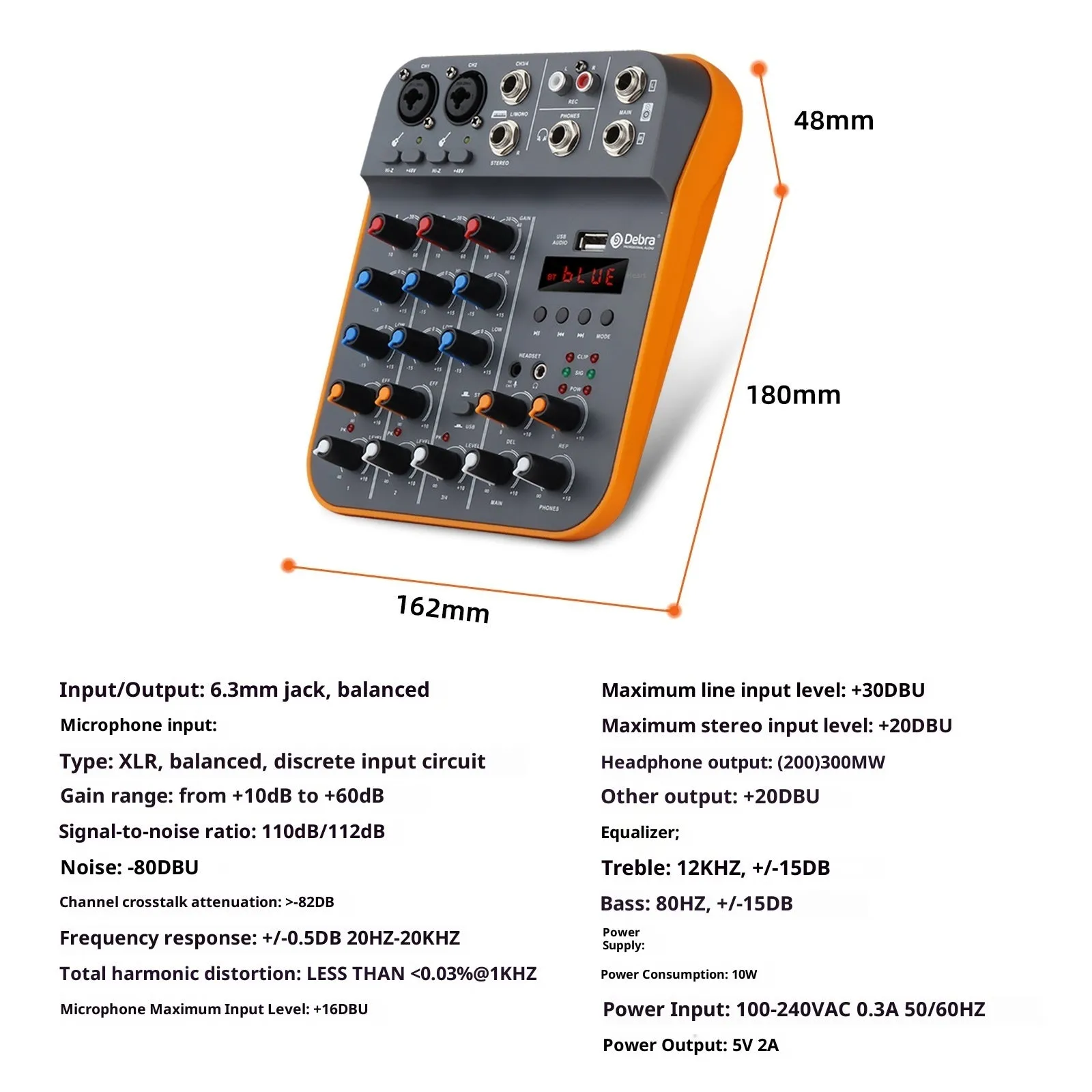
The listed size is 26 x 22.5 x 8 cm. That gives a clear idea of the footprint and height, although the source does not say which measurement corresponds to width, depth or height. In practice, a unit in this size range can sit on a typical home desk alongside a laptop or monitor. It is not a full-sized console, so it suits spaces where a larger mixer would be inconvenient. If you need exact clearance for a shelf or case, measure against the 26 x 22.5 x 8 cm figures and allow a little extra room for cables and the power cord.
Uses and Placement
Because the source lists only a USB interface and a reverb function, the most realistic uses are home-based audio tasks that involve a computer. The compact size and plastic body also make it easy to move between rooms or pack away. This section covers event or professional use and everyday home use, sticking to what the stated specification supports rather than promising studio-grade results.
Event or Professional Use
For small events, talks or simple presentations, a compact mixer with reverb can be used to combine and adjust audio from a USB-connected source. The D4M standard specification provides a fixed reference point, and the small size means it can be carried in a bag or stored in a cupboard between uses. It is not described as a large multi-channel console, so it is best treated as a portable helper rather than the centre of a complex live rig. Any professional use should be planned around the single USB interface and the reverb function that are actually listed.
Everyday Home Use
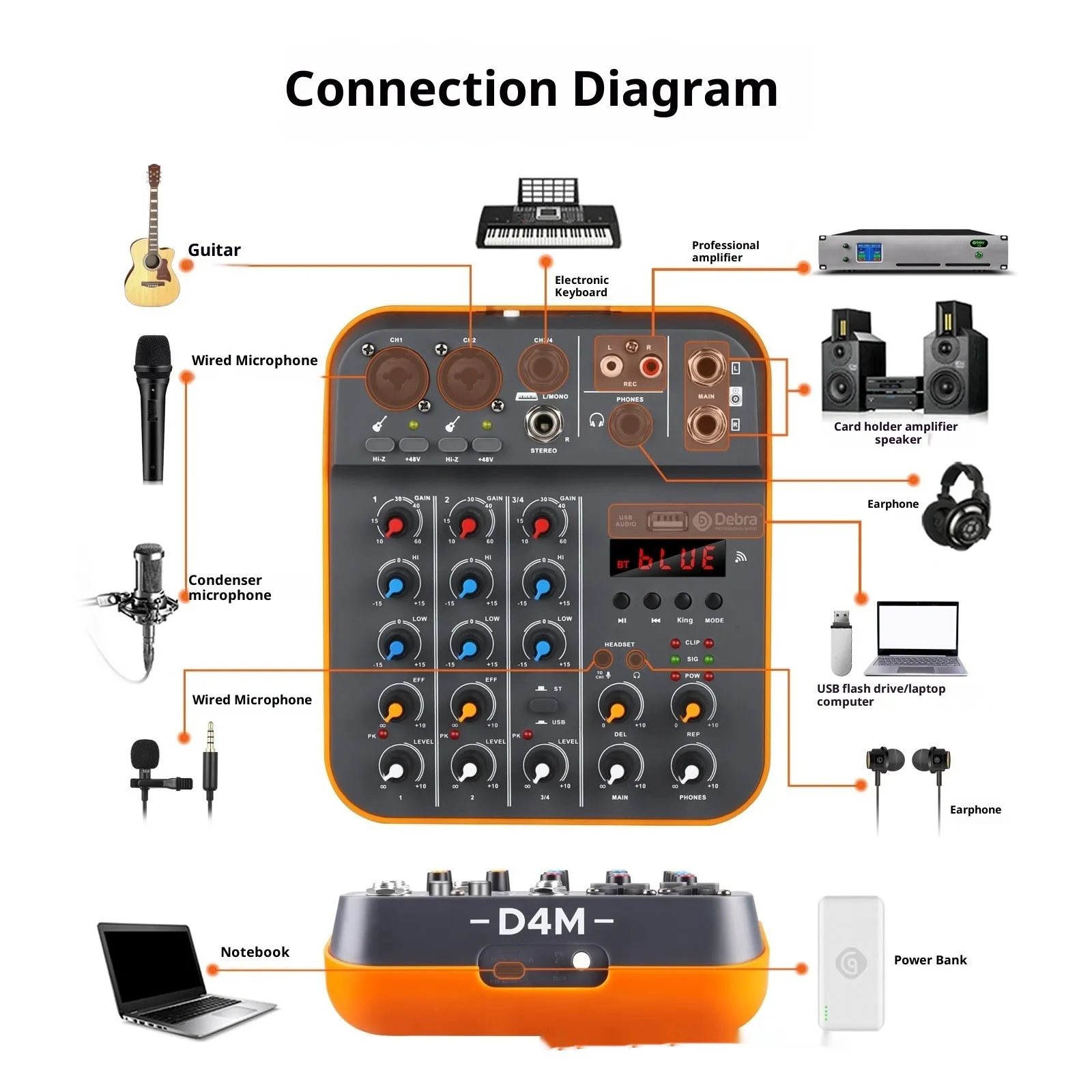
At home, this mixer can sit on a desk for podcasting, voice recording, streaming or casual music setup. The USB interface allows connection to a computer, and the reverb control can be used to add a sense of space to a voice or instrument. The 26 x 22.5 x 8 cm size keeps the desk tidy compared with a larger board. Because the source does not mention microphone inputs, instrument inputs or monitoring outputs, those connections cannot be confirmed, so check the unit's actual sockets against your own equipment before buying.
Benefits and Buying Value
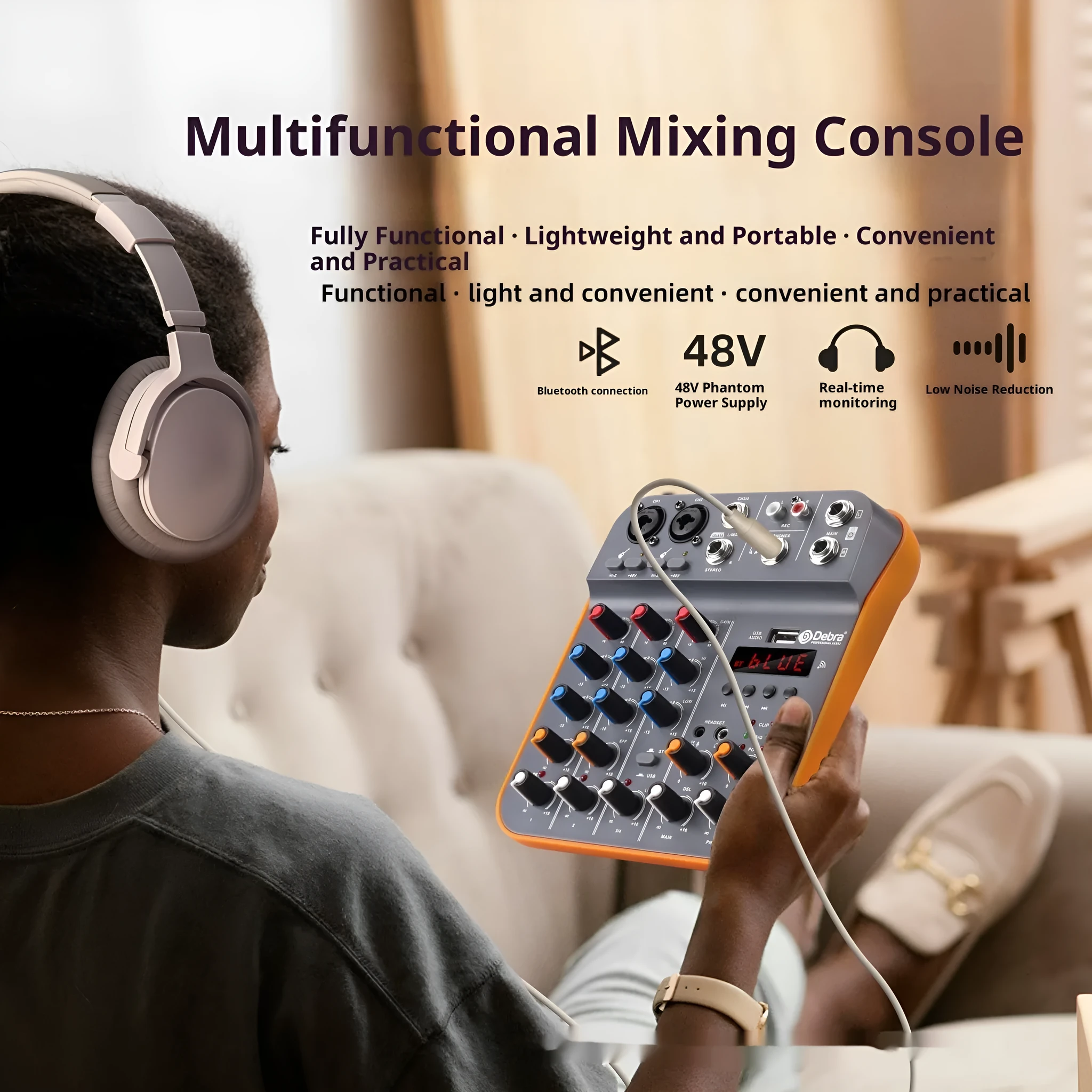
The main buying value comes from the combination of a small size, a plastic body, a USB interface and a built-in reverb function. These are the facts stated in the source, and they point to a unit that is easy to place, easy to power and straightforward to connect to a computer. There are no price, savings or warranty figures in the source, so value is discussed only in terms of practicality and reuse.
Reuse and Low Maintenance
The plastic body can be wiped clean with a soft dry cloth, which is a low-risk approach for this material. Since the mixer is small and light, it can be moved between a desk, a shelf and a storage box without much effort, making it easy to reuse for different home audio tasks. The supplied power cord and instruction manual mean the basic setup items are included. No replacement parts, carry case or cleaning products are listed, so those would need to be sourced separately if required.
Why Choose This Product
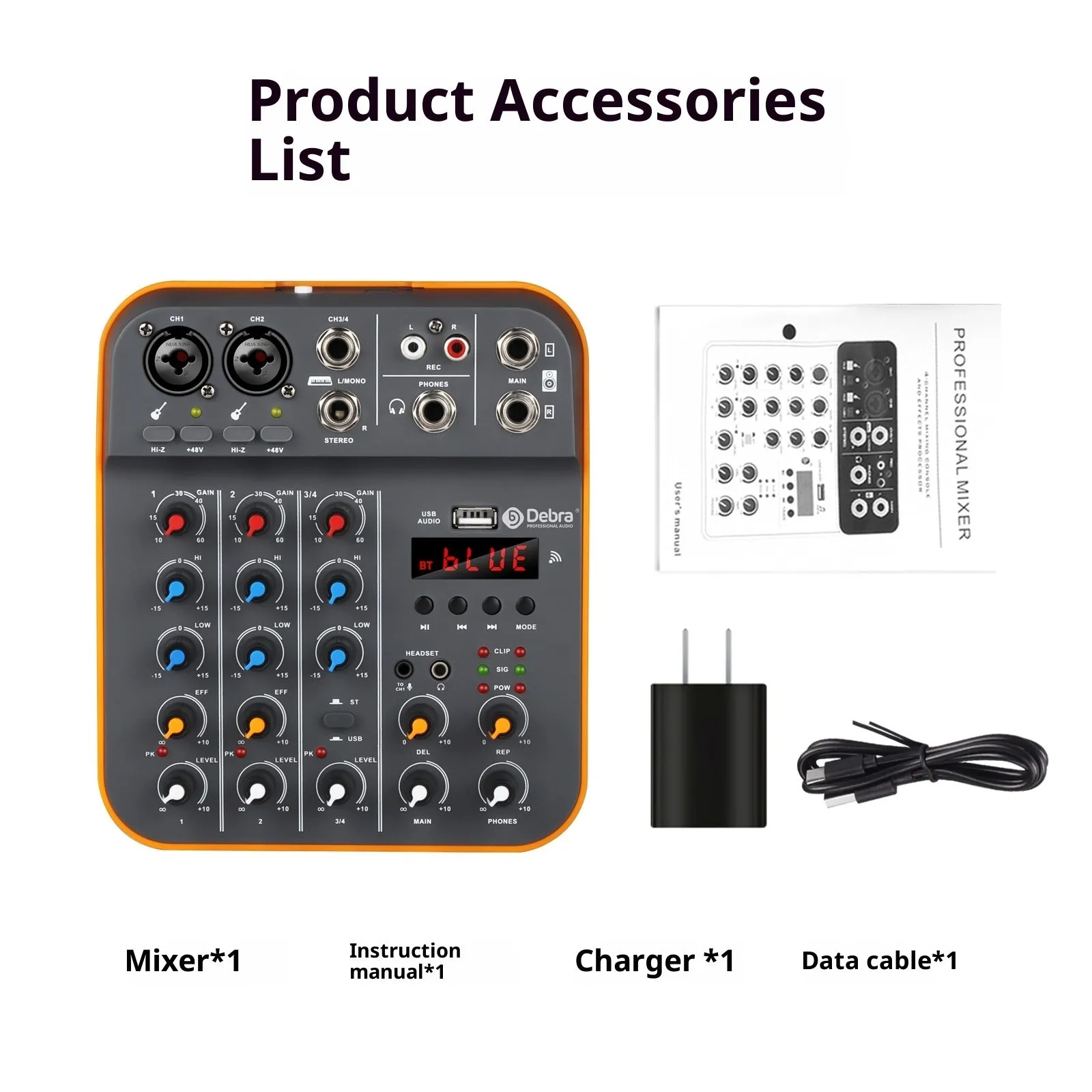
Choose this mixer if you want a compact, plastic-bodied unit with a stated D4M standard specification, a USB interface and a reverb function. The 26 x 22.5 x 8 cm size suits household desks and small work areas where a full-sized mixer would take up too much room. The packing list is clear: one mixer, one power cord and one instruction manual. If your setup depends on specific input types, channel counts or effects parameters, note that those details are not provided in the source, so confirm them before purchase.