
Arduino R3 Super Starter Kit with UNO R3 Board, Breadboard, LEDs, Sensors, Motors, LCD Display and Tutorial CD for Electronics Learning and Project Development


Arduino R3 Super Starter Kit with UNO R3 Board, Breadboard, LEDs, Sensors, Motors, LCD Display and Tutorial CD for Electronics Learning and Project Development
Arduino UNO R3 Super Starter Kit with Breadboard, Sensors, Motors and Tutorial CD for Electronics Learning

This LAFVIN Super Starter Kit for Arduino UNO R3 provides a foundational collection of electronic components designed for newcomers to microcontroller programming and circuit design. The central element is a blue-coloured Arduino UNO R3 development board, compatible with the standard Arduino IDE, paired with an 830-point solderless breadboard for rapid, tool-free prototyping. With over 35 different component types included—from basic LEDs and resistors to advanced modules like an LCD display, ultrasonic sensor, and motor drivers—this kit removes the initial barrier of sourcing parts individually. It is structured to support practical, hands-on learning through the provided CD-based tutorials, guiding users from simple blinking LED circuits to more complex projects involving sensor data reading and motor control. The comprehensive nature of the kit makes it a practical choice for students in STEM subjects, hobbyists exploring home automation or robotics, and educators seeking a ready-to-use teaching resource for introductory electronics courses.
Features and Construction

This kit is defined by the breadth and practical selection of its included components, all chosen to facilitate a wide range of learning projects. The construction centres on the Arduino UNO R3, a robust and widely supported microcontroller board, and a large-format breadboard that allows for complex circuit assembly without soldering. Every component is supplied in quantities suitable for tutorial completion and experimentation, with multiple values of resistors and a full colour range of LEDs enabling fundamental circuit lessons.
Material and Build
The components are constructed from standard electronic materials: the UNO R3 board and modules use fibreglass PCBs with soldered components and connectors, while the breadboard is made from plastic with metal contact strips. Sensors like the DHT11 and ultrasonic module come in their typical plastic housings. Motors, including the SG90 servo and the unipolar stepper motor, have plastic gears and metal shafts. The jumper wires feature flexible insulated leads with Dupont connectors designed for secure insertion into breadboard and header pins. The kit focuses on providing functional, workable parts for learning rather than emphasising any specific premium material claims.
Size and Practical Fit
While overall kit dimensions are not specified, the components are standard in size for electronics hobbyist use. The 830-point breadboard offers a substantial working area for multiple concurrent circuits. The UNO R3 board follows the standard form factor, allowing it to be easily mounted or used with external cases. The variety of included modules, such as the compact joystick and membrane switch, are designed to connect directly to the breadboard or the Arduino via the provided jumper wires and prototype shield, ensuring a cohesive and space-efficient setup for a desktop learning environment.
Uses and Placement
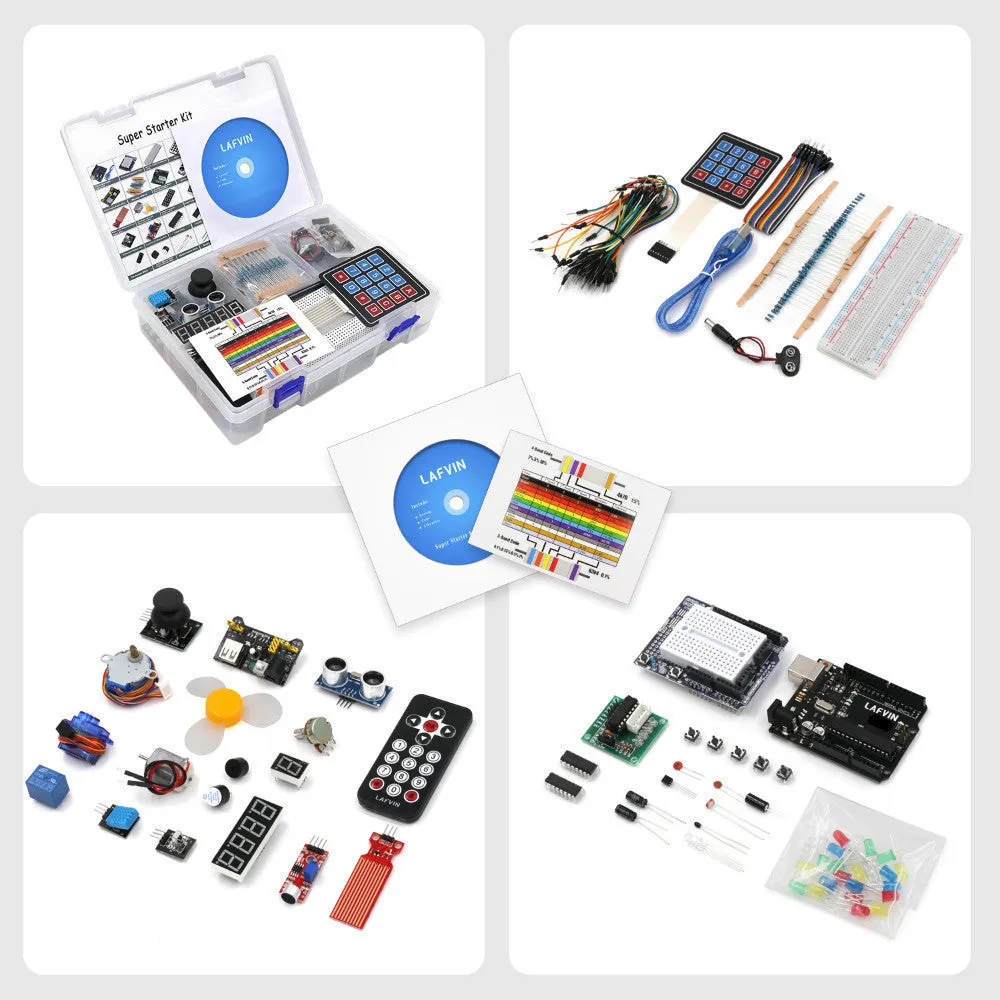
The kit’s primary use case is structured education and self-directed project development in electronics and programming. The inclusion of a tutorial CD suggests a curriculum-like path, starting with basic concepts and advancing to integrated systems. This makes it suitable for placement in educational settings like school classrooms, university labs, or makerspaces, as well as on the workbench of a home hobbyist.
Event or Professional Use
In professional or workshop contexts, such as coding bootcamps, STEM outreach events, or corporate training sessions, this kit serves as a complete, individual workstation. The breadth of components allows instructors to demonstrate a wide array of principles—from digital input with buttons and switches to analogue sensing with photoresistors and potentiometers, and onward to output control of displays, buzzers, and motors. The presence of motor drivers (L293D, ULN2003) and motors enables the creation of basic robotic or automation demonstrations, making it a practical tool for illustrating mechatronics concepts.
Everyday Home Use
For the everyday learner at home, the kit supports the gradual development of skills needed for personal projects. A user could progress from making a simple light-activated switch using the photoresistor to building a temperature and humidity monitor with the DHT11 module and LCD display. The infrared receiver and remote allow for the creation of custom remote-controlled devices, while the water lever sensor opens possibilities for simple plant watering alarms or leak detectors. The kit provides the tangible parts to bridge the gap between theoretical code and physical interaction.
Benefits and Buying Value
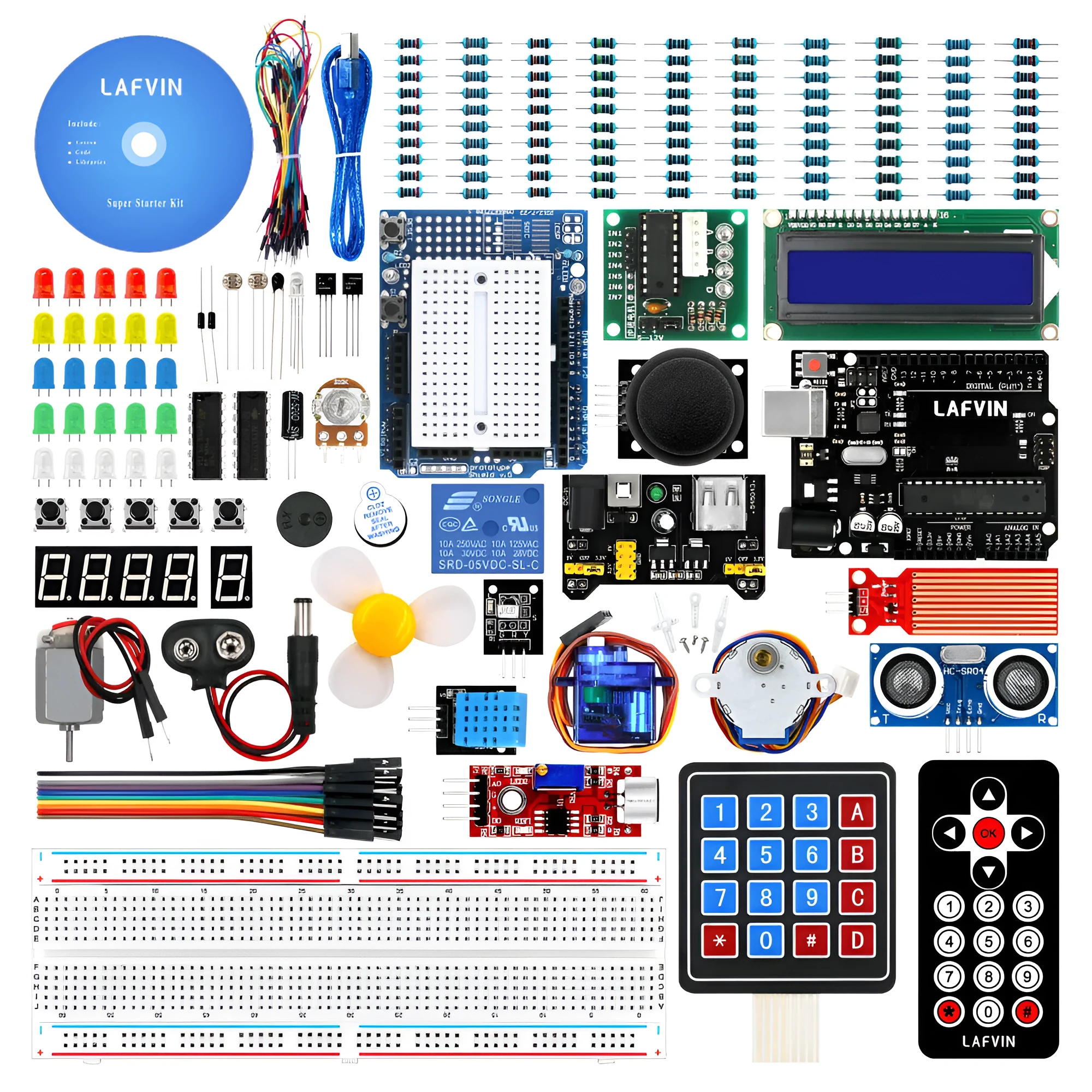
The core benefit of this starter kit is consolidation; it gathers a logically selected set of interoperable components that are commonly used in introductory Arduino projects. This offers clear buying value by saving the time, effort, and potential shipping costs involved in purchasing each item separately from different suppliers. The inclusion of the tutorial CD and component ID card adds immediate educational structure, reducing the initial research burden for a novice.
Reuse and Low Maintenance
The components are designed for reuse across multiple projects. The breadboard and jumper wires allow for non-destructive circuit building and dismantling. The UNO R3 board can be reprogrammed endlessly for new applications. Most components, like the sensors, motors, and ICs, have no consumable parts and can be integrated into permanent projects later. Maintenance is minimal, primarily involving the careful handling of components to avoid bent pins or damaged connectors, and ensuring the USB cable and power connections are used correctly.
Why Choose This Product
Choose this LAFVIN Super Starter Kit if you need a single, comprehensive package to begin working with Arduino. Its strength lies in the specific combination of a standard UNO R3 board, a large breadboard, and a particularly wide variety of sensors and output devices not always found in basic kits. The inclusion of motor control modules and motors specifically supports robotics learning, a step beyond simple LED projects. While it does not specify advanced features like high-precision components or specialised shields, it provides a robust foundation of practical parts that align closely with common online tutorials and project guides, offering a high utility-to-cost ratio for the beginner to intermediate learner.
